
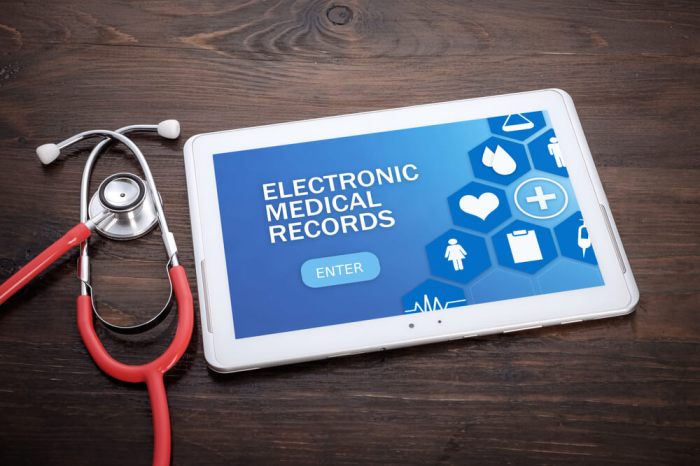
As The Ultimate Guide to Smart Home Automation and Security: Enhancing Safety and Efficiency with Health IT in Electronic Medical Records (EMR) takes center stage, this opening passage beckons readers into a world crafted with good knowledge, ensuring a reading experience that is both absorbing and distinctly original.
Exploring the benefits of smart home automation and the crucial role of Health IT in Electronic Medical Records (EMR) promises to shed light on cutting-edge technologies that are reshaping our homes and healthcare systems alike.
The Ultimate Guide to Smart Home Automation and Security
Smart home automation refers to the use of technology to control various devices and systems within a home remotely. This includes lighting, thermostats, security cameras, door locks, and more. By integrating these devices with a central hub or smartphone app, homeowners can automate tasks and monitor their home from anywhere.
Key Benefits of Smart Home Technology
- Increased convenience and efficiency: With smart home automation, you can control and schedule various tasks, such as adjusting the thermostat or turning off lights, with just a few taps on your smartphone.
- Enhanced security: Smart home security systems allow you to monitor your home in real-time, receive alerts for suspicious activity, and even remotely control door locks and cameras.
- Energy savings: By automating lighting, heating, and cooling systems, smart homes can help reduce energy waste and lower utility bills.
- Peace of mind: With the ability to monitor your home remotely, smart home technology provides a sense of security and peace of mind, especially when away from home.
Components of a Smart Home Security System
- Smart cameras: These cameras can provide live video feeds, motion detection, and two-way audio communication.
- Smart door locks: These locks allow you to control access to your home remotely, track entry and exit times, and receive notifications when someone enters.
- Smart sensors: These sensors can detect motion, smoke, carbon monoxide, water leaks, and more, sending alerts to your smartphone in case of emergencies.
- Smart alarms: These alarms can sound off in case of unauthorized entry or other security breaches, while also sending alerts to your phone.
Comparison of Smart Home Automation Platforms
- Amazon Alexa: Works with a wide range of smart home devices, offers voice control capabilities, and integrates well with other Amazon services.
- Google Assistant: Similar to Alexa, Google Assistant supports a variety of devices, provides voice control options, and works seamlessly with Google products.
- Apple HomeKit: Designed for Apple users, HomeKit offers strong security features, integrates with Siri for voice commands, and is compatible with a range of smart home devices.
- Samsung SmartThings: Known for its versatility, SmartThings supports a wide array of devices, offers customizable automation options, and is compatible with both Android and iOS devices.
The Role of Health IT in Electronic Medical Records (EMR)
Health IT, or Health Information Technology, plays a crucial role in modern healthcare systems by utilizing technology to manage health information efficiently. It encompasses a wide range of technologies to store, share, and analyze health information, ultimately improving the quality of patient care. The evolution of Electronic Medical Records (EMR) systems has revolutionized the way healthcare providers document and manage patient information.
EMRs have replaced traditional paper-based records with digital files that can be easily accessed, updated, and shared among healthcare professionals.
Impact of Health IT on Patient Care and Safety
- Health IT systems such as EMRs enable healthcare providers to access patient information quickly and accurately, leading to more informed decision-making and improved patient care.
- EMRs help reduce medical errors by providing alerts for potential drug interactions, allergies, and other critical information that can prevent adverse events.
- Through secure data sharing, EMRs allow for better coordination of care among multiple healthcare providers, leading to more comprehensive and efficient treatment plans.
Enhancing Efficiency in Healthcare Settings
- EMRs streamline administrative tasks by automating processes such as appointment scheduling, billing, and coding, reducing paperwork and improving workflow efficiency.
- Health IT systems can integrate with other technologies, such as telemedicine and remote monitoring devices, to provide more personalized and convenient care options for patients.
- By analyzing data stored in EMRs, healthcare organizations can identify trends, track outcomes, and implement evidence-based practices to improve overall healthcare delivery.
Final Conclusion
In conclusion, the intricate dance between smart home automation and Health IT in Electronic Medical Records (EMR) underscores a future where convenience, security, and patient care converge seamlessly. This guide serves as a compass, navigating through the complexities of these domains and illuminating the path towards a smarter, safer world.
FAQ Corner
What are the key benefits of smart home automation?
Smart home automation offers enhanced security, energy efficiency, convenience, and customization options for homeowners.
How does Health IT improve patient care in healthcare settings?
Health IT streamlines processes, enhances communication among healthcare providers, reduces medical errors, and provides quick access to patient information, leading to improved care outcomes.
What are some examples of smart home automation platforms available in the market?
Popular smart home automation platforms include Amazon Alexa, Google Home, Apple HomeKit, Samsung SmartThings, and more.