Beginning with Careers in Health Information Technology: Opportunities and Growth, the narrative unfolds in a compelling and distinctive manner, drawing readers into a story that promises to be both engaging and uniquely memorable.
As we delve into the realm of Health Information Technology, a world of opportunities and growth awaits those ready to explore the dynamic field.
Overview of Health Information Technology Careers
Health Information Technology (HIT) encompasses the management of health information through the use of technology systems. This field plays a crucial role in maintaining the accuracy, security, and accessibility of patient data within the healthcare industry.
Significance of HIT in the Healthcare Industry
Health Information Technology is vital for ensuring the efficiency and effectiveness of healthcare delivery. By leveraging technology to manage and analyze health data, HIT professionals help improve patient care, streamline operations, and support decision-making processes in healthcare settings.
Career Paths within Health Information Technology
- Health Informatics Specialist: Responsible for managing and analyzing health data to improve patient outcomes and inform healthcare strategies.
- Clinical Coding Specialist: Focuses on assigning accurate medical codes to diagnoses and procedures for billing and data analysis purposes.
- Health Data Analyst: Utilizes data to identify trends, patterns, and insights that can drive improvements in healthcare quality and efficiency.
- Health Information Manager: Oversees the maintenance of patient records, compliance with regulations, and implementation of information systems in healthcare organizations.
- Telehealth Coordinator: Coordinates the delivery of healthcare services remotely through telecommunication technologies, ensuring access to care for patients.
Educational Requirements and Skills
To pursue a career in Health Information Technology (HIT), individuals typically need to meet certain educational qualifications and possess specific skills. These requirements are crucial for success in this field.
Educational Qualifications
- A minimum of an associate degree in Health Information Technology, Health Informatics, or a related field is often required for entry-level positions.
- Some roles may necessitate a bachelor's degree in Health Information Management or a related discipline.
- Advanced positions or leadership roles may require a master's degree in Health Informatics or a related field.
Importance of Skills
- Data Management:Proficiency in managing electronic health records (EHRs) and other healthcare data is essential for HIT professionals to ensure accuracy and security.
- Coding:Knowledge of medical coding systems such as ICD-10-CM and CPT is crucial for assigning appropriate codes to diagnoses and procedures.
- Compliance:Understanding healthcare regulations like HIPAA and HITECH is vital to ensure that patient information is handled in accordance with legal requirements.
Certifications in Health Information Technology
- Registered Health Information Technician (RHIT): This certification demonstrates proficiency in managing health information and medical records.
- Certified Health Data Analyst (CHDA): Ideal for professionals specializing in data analysis and interpretation within healthcare settings.
- Certified Professional in Healthcare Information and Management Systems (CPHIMS): Focuses on information and management systems within healthcare organizations.
Job Opportunities and Growth in Health Information Technology
In the ever-evolving landscape of healthcare, the demand for skilled Health Information Technology (HIT) professionals continues to rise. As technology plays a crucial role in the efficient management of patient data and healthcare information, the job market for HIT professionals is full of opportunities.
Overview of the Job Market for HIT Professionals:
The job market for HIT professionals is robust, with a wide range of career options available in various healthcare settings such as hospitals, clinics, insurance companies, and government agencies. HIT professionals are in high demand due to the increasing emphasis on electronic health records (EHRs) and data analytics in healthcare.
Current and Projected Growth Opportunities:
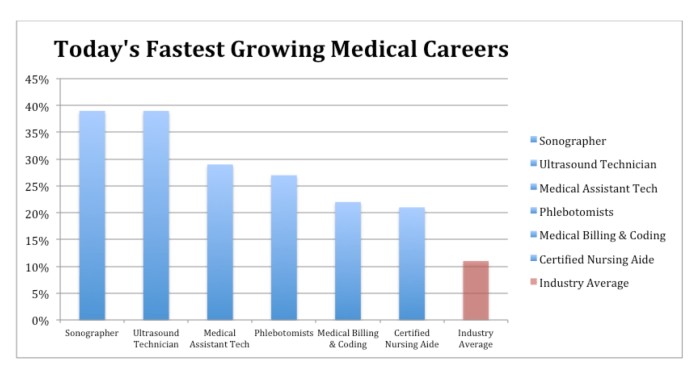
The field of Health Information Technology is expected to experience substantial growth in the coming years. According to the Bureau of Labor Statistics, employment of medical records and health information technicians is projected to grow 8% from 2019 to 2029, much faster than the average for all occupations
This growth is driven by the aging population and the need to digitize health records for better patient care.
Demand for Different HIT Roles:
Health Information Manager
Health Information Managers play a vital role in overseeing the organization and security of patient data. Their responsibilities include managing EHR systems, ensuring compliance with regulations, and analyzing data to improve healthcare processes.
Clinical Coding Specialist
Clinical Coding Specialists assign diagnostic and procedural codes to patient records for billing and insurance purposes. They play a crucial role in ensuring accurate reimbursement and compliance with coding guidelines.
Health Data Analyst
Health Data Analysts are responsible for collecting, analyzing, and interpreting healthcare data to improve patient outcomes and operational efficiency. They play a key role in identifying trends, patterns, and insights from data to support decision-making in healthcare organizations.The demand for these different HIT roles is expected to remain high as healthcare organizations continue to prioritize data-driven decision-making and efficient management of health information.
Pursuing a career in Health Information Technology can offer a rewarding and promising future for individuals passionate about healthcare and technology.
Technological Advancements Impacting Health Information Technology
Artificial Intelligence (AI) and Machine Learning (ML) are revolutionizing Health Information Technology (HIT) by enhancing data analysis, improving patient outcomes, and streamlining healthcare operations. These technologies have the potential to transform the way healthcare information is managed and utilized.
Role of Electronic Health Records (EHR) Systems
Electronic Health Records (EHR) systems play a crucial role in modern healthcare settings by digitizing patient information, enabling secure data sharing among healthcare providers, and facilitating better coordination of care. EHR systems improve efficiency, accuracy, and accessibility of patient data, leading to enhanced decision-making and patient outcomes.
Future Trends in HIT Driven by Technological Advancements
1. Predictive Analytics
AI and ML algorithms can analyze large volumes of healthcare data to predict disease trends, patient outcomes, and treatment responses, enabling proactive and personalized care.
2. Telehealth and Remote Monitoring
Technological advancements allow for remote consultations, monitoring of chronic conditions, and virtual care delivery, expanding access to healthcare services.
3. Blockchain Technology
Implementing blockchain in HIT can enhance data security, interoperability, and transparency, ensuring the integrity and privacy of patient information.
4. Internet of Medical Things (IoMT)
Connected medical devices and wearables can collect real-time patient data, enabling continuous monitoring, early detection of health issues, and personalized interventions.
5. Augmented Reality (AR) and Virtual Reality (VR)
AR and VR technologies can be utilized for medical training, patient education, and surgical planning, improving healthcare outcomes and patient experience.
Closing Notes
In conclusion, Careers in Health Information Technology present a vast array of possibilities for those seeking to make a difference in healthcare through innovative technological solutions. As the industry continues to evolve, embracing these opportunities can lead to a fulfilling and impactful career journey.
Query Resolution
What are the typical educational qualifications required for a career in Health Information Technology?
Educational qualifications often include a degree in Health Informatics, Health Information Management, or a related field. Some roles may require certifications or specialized training.
How are Artificial Intelligence and Machine Learning impacting the field of Health Information Technology?
AI and ML are revolutionizing HIT by improving data analysis, predictive analytics, and decision-making processes in healthcare. They are enhancing efficiency and accuracy in managing health information.
What are some certifications that can benefit professionals in Health Information Technology?
Certifications such as Certified Professional in Healthcare Information and Management Systems (CPHIMS) or Registered Health Information Administrator (RHIA) can enhance career prospects and demonstrate expertise in the field.